How Does a Disabled Toilet Alarm System Work?
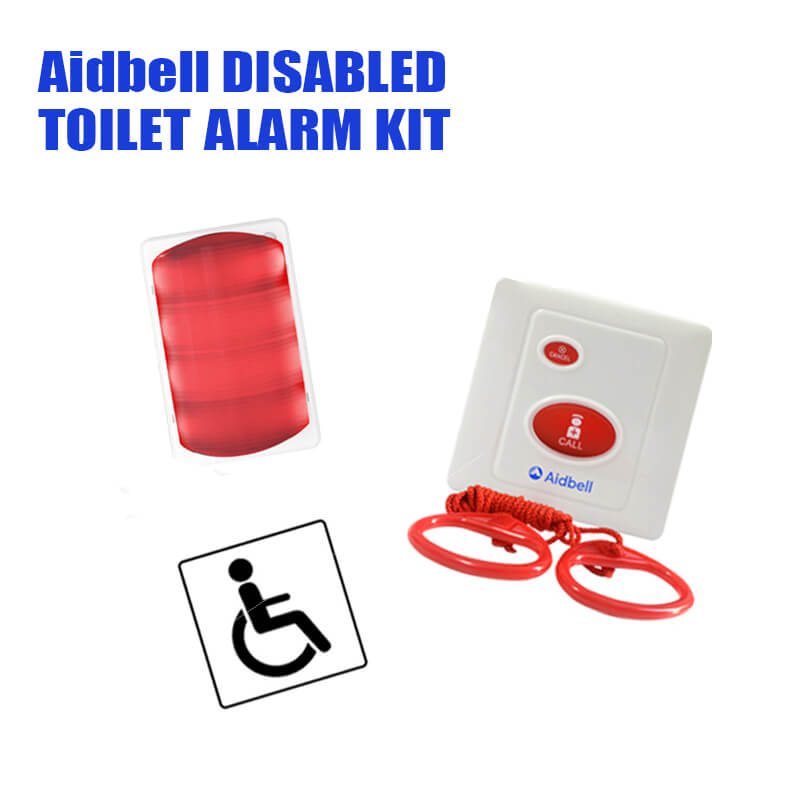
A disabled toilet alarm system allows a person inside an accessible toilet to quickly request assistance during an emergency. It is particularly important when someone slips, falls, feels unwell or cannot reach the door without help.
By pulling an emergency cord, the user activates a visible and audible alert outside the toilet. Staff can then identify the alarm location and respond promptly.
Aidbell offers both Wireless and Wired disabled toilet alarm systems for hospitals, clinics, nursing homes, hotels, shopping centres, railway stations, office buildings and other public or commercial facilities.
What Is a Disabled Toilet Alarm System?
A disabled toilet alarm system is an emergency assistance system designed for accessible toilets and bathrooms.
Unlike a fire alarm, which warns everyone in a building, a toilet alarm sends a local assistance alert to nearby staff or caregivers. Its purpose is to help a person who may have fallen, become unwell or require urgent support inside the toilet.
A typical system includes:
- An emergency pull cord inside the toilet
- Two adjustable pull-cord handles
- An overdoor indicator and sounder
- A reset function
- A power supply or control unit
- Backup power on selected models
When the emergency pull cord is activated, the overdoor unit produces a flashing light and a distinct audible alarm. This helps staff locate the correct toilet and provide assistance quickly.
How Does a Disabled Toilet Alarm System Work?
The operating process is simple:
- A person inside the toilet pulls the emergency cord.
- The pull-cord unit sends an alarm signal to the receiver or control unit.
- The overdoor indicator begins flashing and sounding.
- Staff identify the toilet where assistance is required.
- A staff member attends the location and provides help.
- The alarm is reset after the situation has been handled.
For Aidbell Wireless Disabled Toilet Alarm System DTA-01, the pull-cord unit communicates with the overdoor indicator and sounder through a 433 MHz wireless signal. This eliminates complicated signal cabling between the two devices.
For Aidbell Wired Disabled Toilet Alarm System DTA-02, the emergency pull cord, reset panel, overdoor light and main control unit are connected by cables to provide a complete accessible toilet alarm solution.
Main Components of the Aidbell DTA-01
The Aidbell DTA-01 is a wireless disabled toilet alarm kit designed for easy installation in retrofit projects and individual accessible toilets.
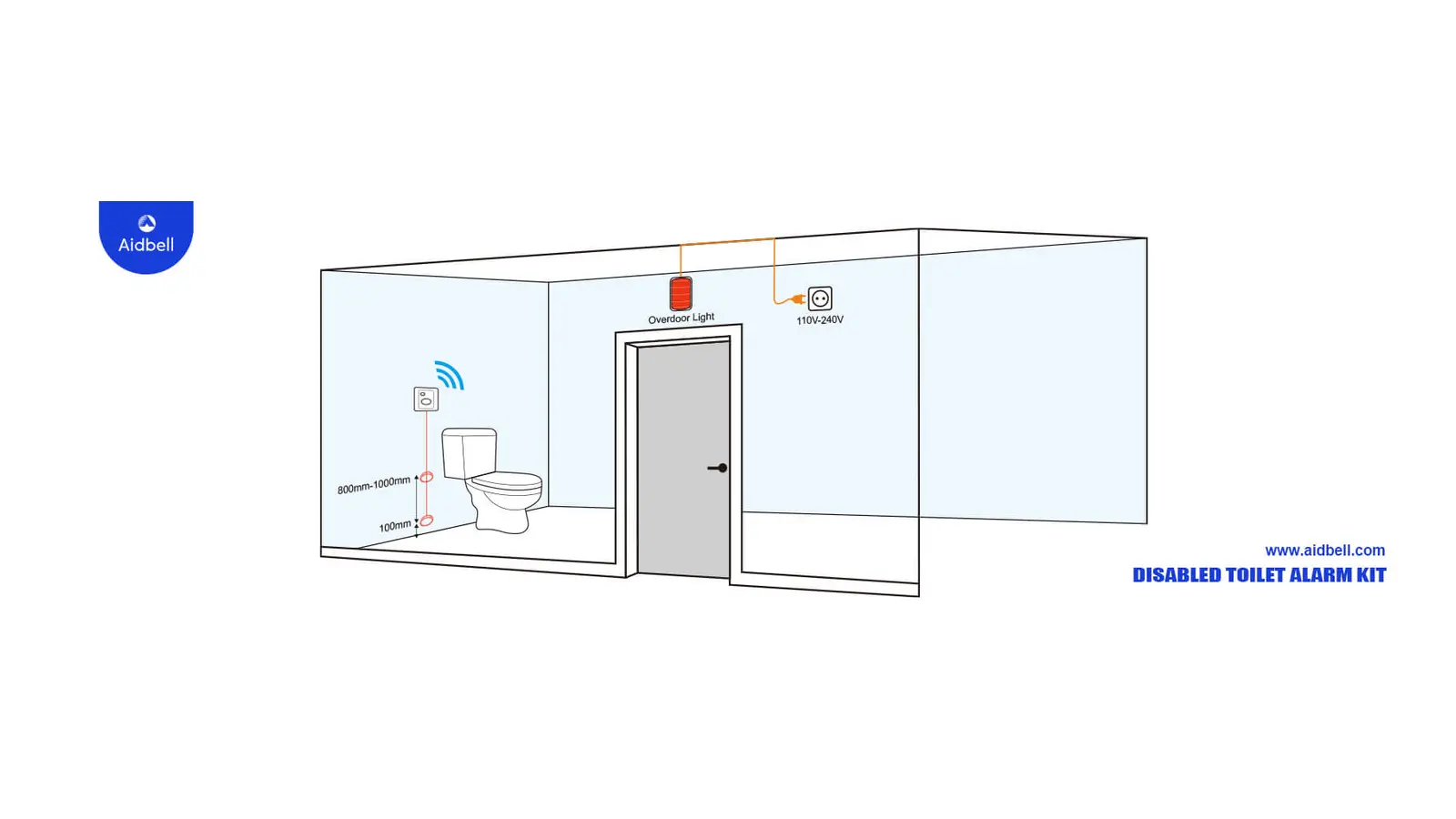
Recommended installation height for the disabled toilet alarm pull cord and overdoor light.
Emergency Pull Cord
The emergency pull cord is installed inside the toilet where it can be reached from the toilet, a wheelchair or the floor.
The Aidbell pull-cord unit includes two adjustable red handles. The bright red colour provides a strong visual contrast against most walls and floors, making the cord easier to identify during an emergency.
The pull-cord panel also includes a RESET button. The alarm can be cancelled if it is activated accidentally or reset by staff after assistance has been provided.
Overdoor Indicator and Sounder
The overdoor indicator and sounder is normally installed outside the toilet.
When it receives an emergency call, it produces:
- A bright flashing light
- A loud and distinct alarm sound
- Continuous notification until the alarm is reset
The combined visual and audible notification helps staff notice the emergency even in busy environments.
The alarm sound should be clearly distinguishable from other building alerts, such as fire alarms or security alarms. This allows staff to recognise that someone in an accessible toilet requires assistance.
Wireless Communication
The Aidbell DTA-01 operates on a 433 MHz wireless frequency. Its receiving range can reach approximately 200 metres in an open area.
Actual indoor coverage may vary depending on walls, floors, building materials, interference and installation conditions. A signal test should therefore be completed at the project site before final installation.
Because no signal cable is required between the pull cord and overdoor unit, the wireless system is particularly suitable for:
- Existing buildings
- Retrofit projects
- Individual accessible toilets
- Locations where new cabling is difficult
- Projects requiring fast installation
Backup Power
The Aidbell overdoor indicator and sounder includes a rechargeable backup battery. During normal operation, the unit is powered through its adaptor.
If the main power supply is interrupted, the backup battery helps the alarm system continue operating. This provides additional protection for facilities where reliable emergency communication is important.
Why Are Two Pull-Cord Handles Necessary?
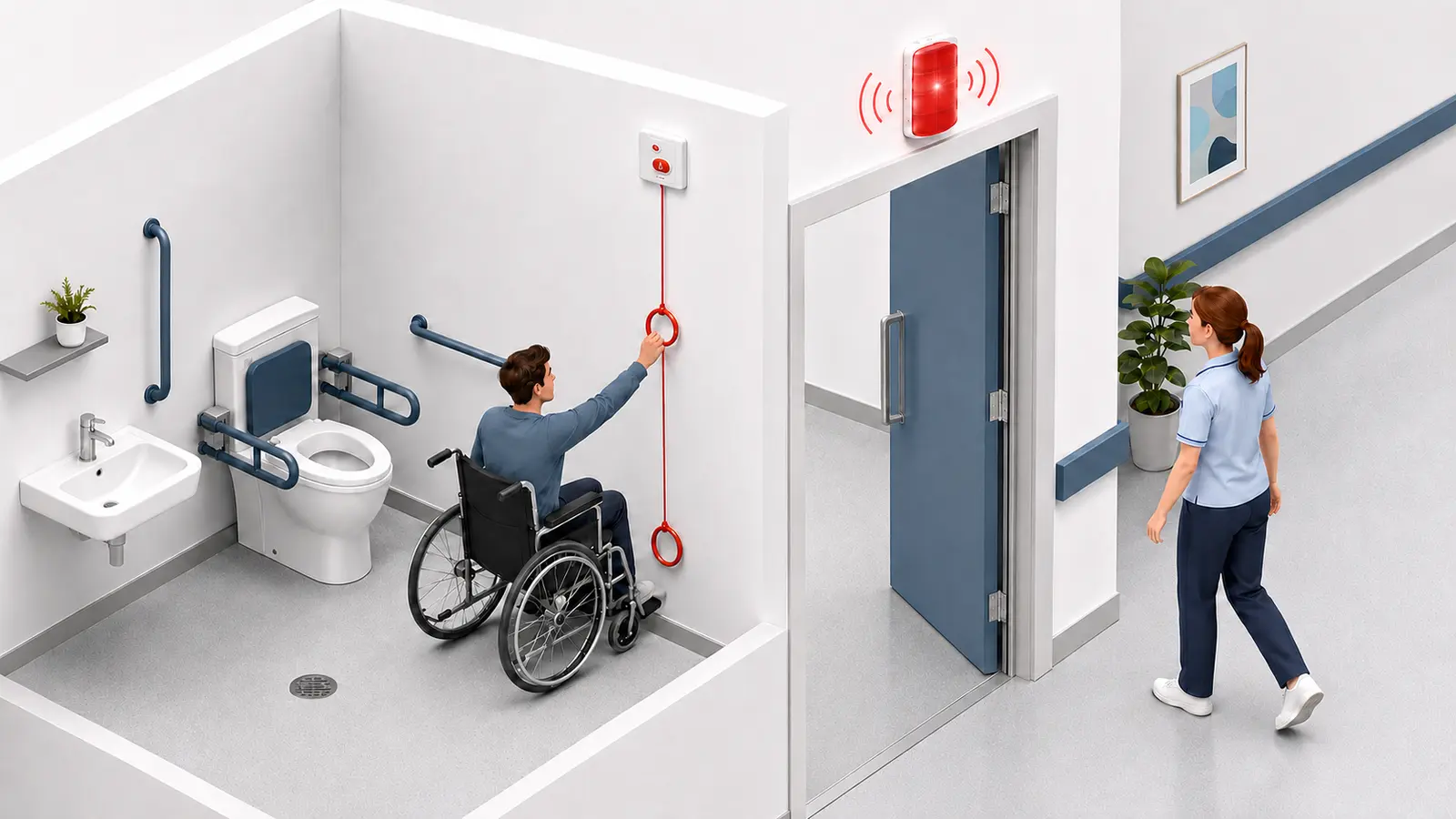
The emergency pull cord activates the overdoor light and sounder to alert staff when assistance is required.
A disabled toilet alarm must remain accessible whether the user is sitting or has fallen to the floor.
For this reason, the pull cord should have two handles positioned at different heights:
- The upper handle should generally be positioned approximately 80–100 cm above floor level, making it accessible from a toilet or wheelchair.
- The lower handle should be positioned approximately 10 cm above floor level, allowing someone who has fallen to reach it.
The cord should hang freely and not be tied, shortened, or placed behind furniture or sanitary equipment.
Installation heights and system configuration should always follow the applicable accessibility requirements and local building regulations in the project country.
Why Are Both Visual and Audible Alerts Important?
A disabled toilet can be located in a busy public building where staff may not always be looking directly at the toilet entrance.
An audible alarm attracts attention, while a flashing light clearly identifies the location where assistance is needed. Using both types of notification improves visibility and makes the alert more effective in different working environments.
Continuous flashing and sounding also reduce the possibility of an emergency call being overlooked. The alarm remains active until it has been properly acknowledged or reset.
For the person inside the toilet, visible or audible confirmation can also provide reassurance that the alarm has been activated.
Why Is a Reset Button Included?
A reset button allows the alarm to be cancelled after assistance has been provided.
It is useful in three common situations:
- The alarm was activated accidentally.
- The user no longer requires assistance.
- Staff have attended the toilet and completed the emergency response.
Locating the reset function near the person requesting assistance can also encourage staff to visit the toilet before cancelling the alarm.
For projects with specific accessibility or compliance requirements, a separate reset panel or main control unit may be more appropriate. In these cases, a wired system such as the Aidbell DTA-02 should be considered.
Where Can a Disabled Toilet Alarm Be Installed?
Disabled toilet alarm systems are suitable for accessible toilets and assistance areas in:
- Hospitals and clinics
- Nursing homes and care homes
- Hotels and resorts
- Shopping centres
- Railway stations and airports
- Schools and universities
- Office buildings
- Restaurants
- Fitness centres and swimming pools
- Changing rooms
- Public service buildings
The same type of assistance alarm can also be used in other locations where a person may need to request help without leaving the room.
Wireless vs. Wired Disabled Toilet Alarm Systems
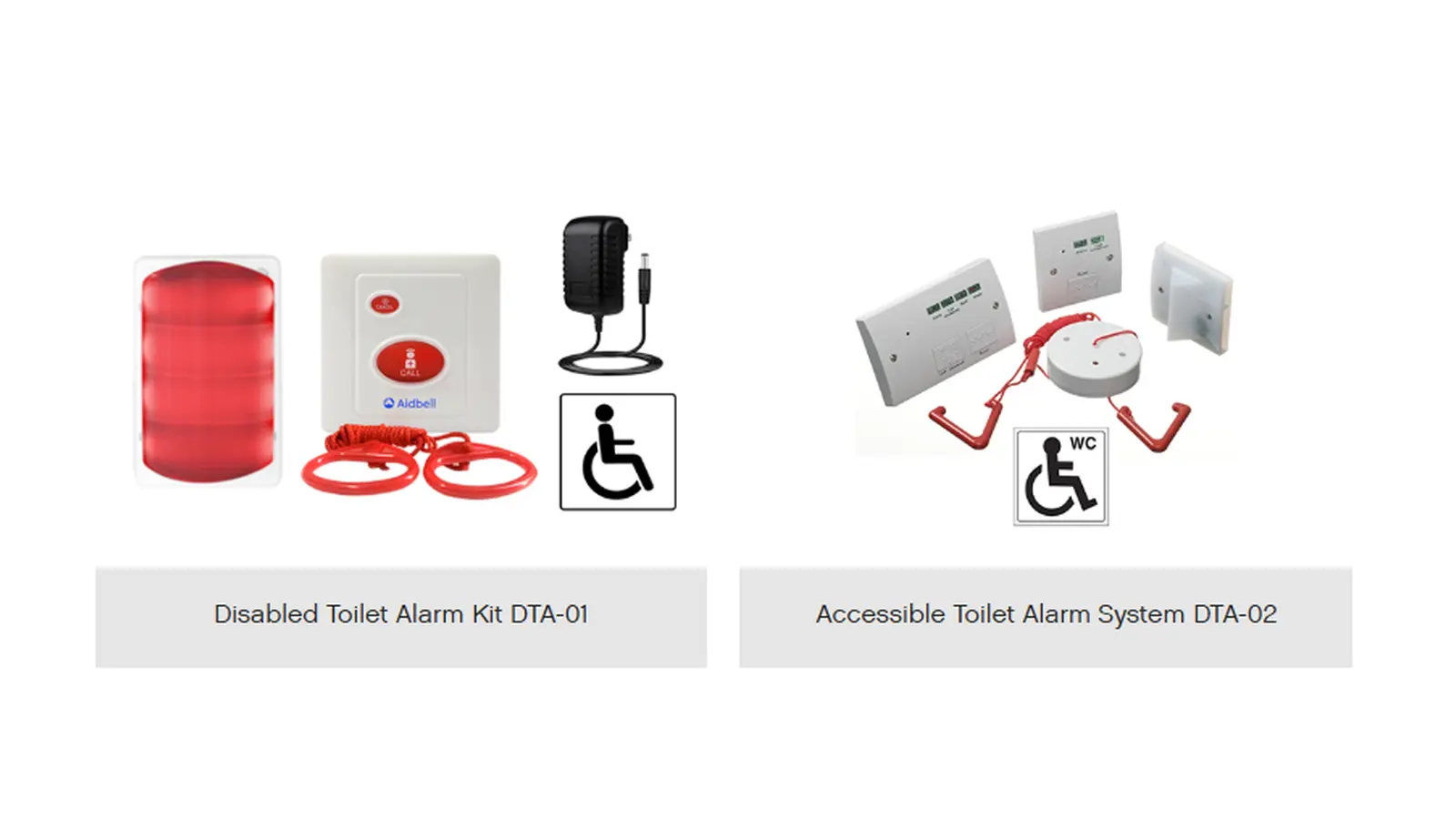
Wireless vs. Wired Disabled Toilet Alarm Systems
Aidbell offers wireless and wired solutions for different project requirements.
| Feature | DTA-01 Wireless System | DTA-02 Wired System |
|---|---|---|
| Installation | No cabling | Need cabling |
| Best application | Retrofit and smaller projects | New construction and specification-based projects |
| Emergency activation | Battery-powered wireless pull-cord unit | Wired emergency pull cord |
| Alarm notification | Overdoor indicator and sounder | Main control unit and overdoor indicator/sounder |
| Reset function | Integrated into the pull-cord panel | Remote reset panel and main control unit |
| Backup power | Rechargeable battery in the overdoor unit | Backup power supported |
| Recommended for | Individual accessible toilets | Commercial and public building projects |
The best choice depends on the building layout, the number of toilets, local regulations, and the required alarm functions.
The wireless DTA-01 is a cost-effective option when fast installation and minimal cabling are priorities. The wired DTA-02 provides a more complete system architecture for projects requiring a main control unit, separate reset panel and additional monitoring functions.
How to Choose the Right System
Before selecting a disabled toilet alarm, consider the following questions:
- How many accessible toilets are included in the project?
- Is the building new or already in operation?
- Can new cables be installed?
- Is a main control unit required at a staffed location?
- Does the project require a separate call-answered function?
- Is backup power required?
- Which local accessibility standards apply?
- Does the alarm need to connect to other monitoring equipment?
For a single toilet or retrofit project, a wireless kit may provide the simplest solution.
For a new public building, hospital or larger commercial project, a wired system may be more appropriate because it offers more control and monitoring options.
Frequently Asked Questions
What happens when the emergency pull cord is activated?
The pull-cord unit sends an emergency signal to the overdoor indicator and sounder or to the main control unit. The system then produces visible and audible alerts to notify staff that assistance is required.
Why should the pull cord reach close to the floor?
A person may fall and be unable to stand. Positioning the lower handle approximately 10 cm above the floor helps ensure that the alarm remains reachable from the ground.
Can a disabled toilet alarm be installed without signal cabling?
Yes. The Aidbell DTA-01 uses 433 MHz wireless communication between the pull-cord unit and overdoor indicator and sounder. This makes it suitable for retrofit projects and locations where new cabling is difficult.
How is the alarm cancelled?
The DTA-01 can be cancelled using the RESET button on the pull-cord panel. The DTA-02 wired system offers reset functions through its dedicated panels. Staff should only reset the alarm after confirming that assistance is no longer required.
Can one overdoor unit receive calls from more than one pull cord?
The required configuration depends on the number of toilets, receiver programming and project layout. Aidbell can recommend a suitable configuration after reviewing the project requirements.
What is the difference between a disabled toilet alarm and a nurse call system?
A disabled toilet alarm is normally designed for emergency assistance inside an accessible toilet. A nurse call system is a larger communication solution used in hospitals, clinics and nursing homes, connecting bedside call buttons, bathroom pull cords, corridor lights, displays, pagers and management software.
Choose the Right Disabled Toilet Alarm for Your Project
A properly designed disabled toilet alarm helps people request assistance quickly and gives staff a clear visual and audible notification.
Aidbell provides the DTA-01 wireless disabled toilet alarm kit for fast, flexible installation and the DTA-02 wired accessible toilet alarm system for more comprehensive building projects.
Tell us your project country, building type, number of accessible toilets and preferred installation method. Our team will recommend a suitable system configuration and provide the relevant specifications.
Contact Aidbell to get a disabled toilet alarm solution for your project.