How Wireless Nurse Call Systems Improve Patient Care
In today’s healthcare environment, hospitals, nursing homes, and elderly care facilities face growing challenges. Aging populations, increasing patient demands, and ongoing nursing staff shortages are putting tremendous pressure on healthcare providers worldwide. To improve operational efficiency while maintaining high-quality patient care, many facilities are upgrading one essential communication tool: the Nurse Call System.
Traditional wired nurse call systems often require expensive installation, complex cabling, and difficult maintenance. As healthcare facilities modernize, more organizations are adopting a Wireless Nurse Call System that offers flexibility, scalability, and easier deployment.
This is where smart wireless technology is transforming healthcare communication.
Why Healthcare Facilities Are Moving Toward Wireless Nurse Call Systems
A nurse call system is more than just a patient assistance button. It serves as the communication bridge between patients and caregivers, directly affecting response time, staff coordination, and patient safety.
Traditional wired systems have several limitations:
- High installation costs caused by extensive cabling
- Difficult system expansion when adding new rooms
- Limited flexibility in older buildings and renovation projects
- Complex maintenance when cables or connections fail
A modern wireless nurse call system can reduce these limitations while supporting faster deployment and easier system expansion.
Improving Patient Safety at the Bedside
Patient safety begins at the bedside. Every patient must have immediate access to nursing assistance, especially elderly patients or individuals with limited mobility.
Smart bedside call buttons provide patients with a simple and reliable way to request assistance whenever needed. Ergonomic handset design, waterproof protection, and Braille accessibility help ensure ease of use for all patients.
For higher-risk areas such as bathrooms and toilets, emergency pull-cord systems provide an additional layer of safety. Patients can instantly request help during falls or medical emergencies, allowing caregivers to respond quickly.
By reducing response delays, healthcare facilities can significantly improve patient safety and satisfaction.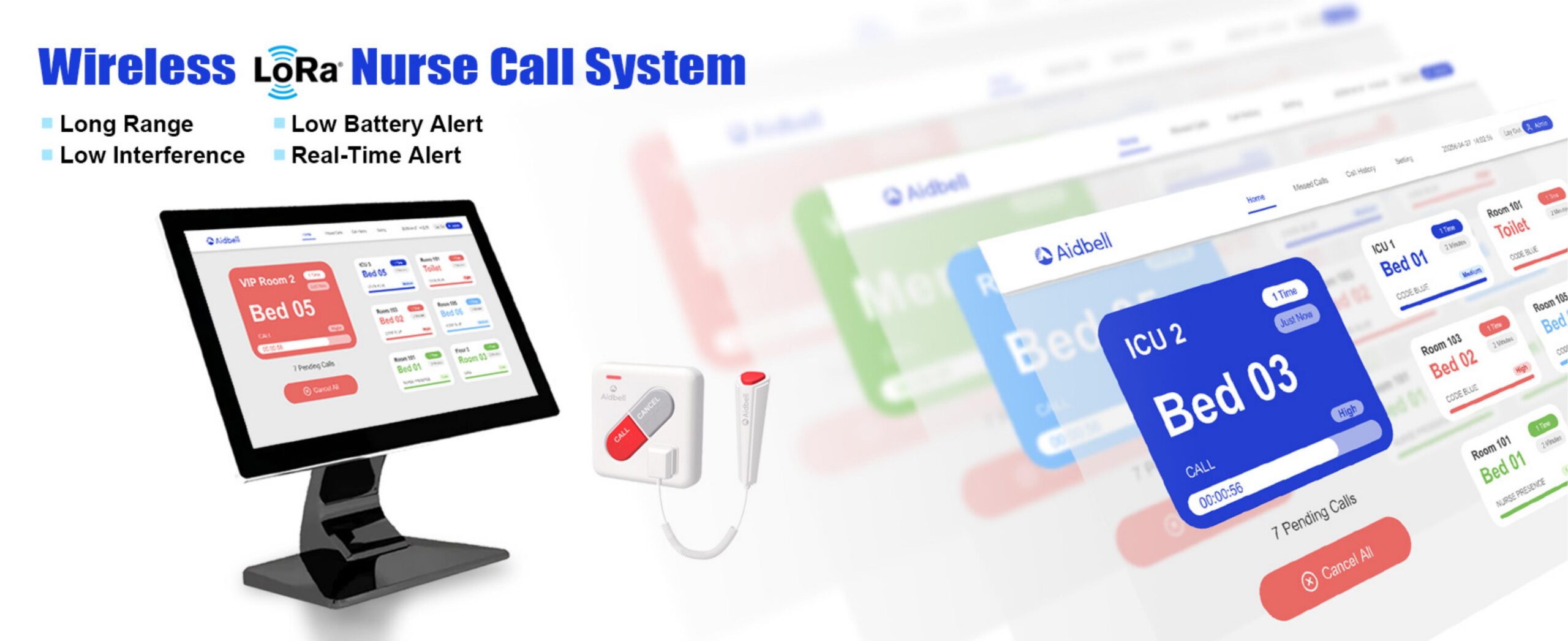
Faster Nurse Response Through Visual Alerts
In busy hospital wards, nurses manage multiple patients simultaneously. Audio alarms alone often create confusion and contribute to alarm fatigue.
A smart hospital nurse call system improves communication by using visual alert devices such as corridor lights and wireless display monitors.
Different alert colors can represent different call priorities:
- Emergency assistance
- Standard patient call
- Nurse presence confirmation
- Bathroom emergency alerts
Nurses can immediately identify the type of request without entering every room, allowing faster prioritization and better workflow management.
This significantly reduces unnecessary movement and improves overall efficiency.
Centralized Nurse Station Management
The true advantage of a smart healthcare communication system appears at the nurse station.
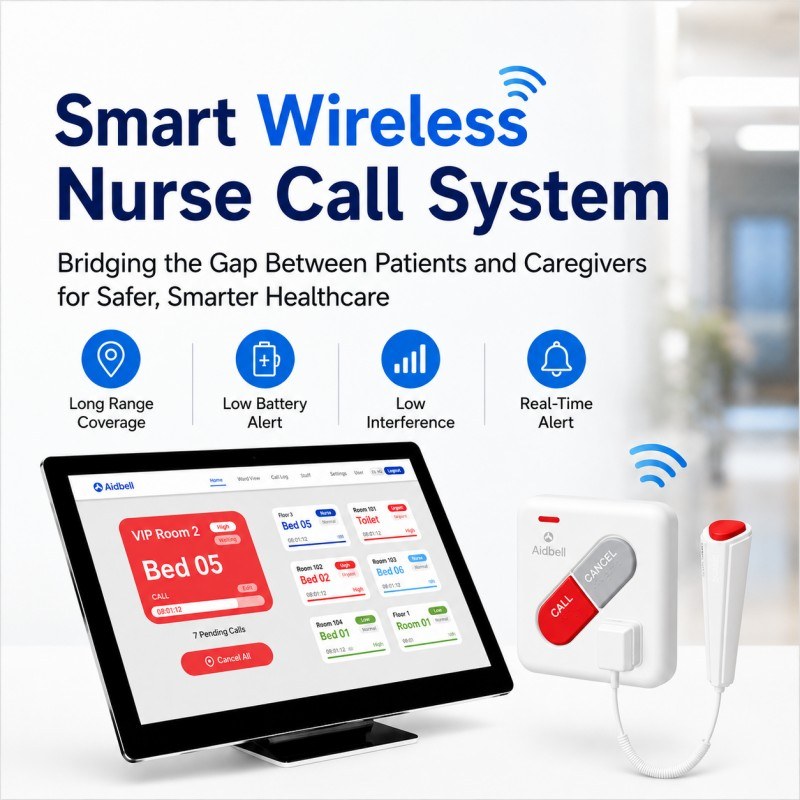
Modern wireless nurse call systems integrate with management software or tablet monitors that allow staff to monitor all active calls in real time.
Nursing teams can instantly view:
- Which room is calling
- How long the patient has been waiting
- Call priority level
- Staff response status
- Historical call records
This centralized monitoring helps supervisors manage nursing workload more effectively while ensuring no patient request is missed.
Instead of reacting to problems after they happen, healthcare managers can make faster operational decisions based on real-time information.
Using Data to Improve Hospital Operations
Modern healthcare increasingly depends on data-driven management.
Unlike traditional nurse call systems, smart wireless systems record valuable operational data that hospitals can analyze to improve service quality.
Healthcare administrators can:
- Measure average nurse response time
- Identify peak calling periods
- Optimize staff scheduling
- Export historical reports for compliance management
- Improve internal workflow efficiency
This allows hospitals to move from reactive patient care toward proactive operational management.
Mobile Communication for Nursing Staff
Nurses spend most of their shifts moving throughout the facility rather than staying at the nurse station.
A fixed nurse station monitor alone may not be sufficient for facilities where caregivers move frequently between rooms and departments.
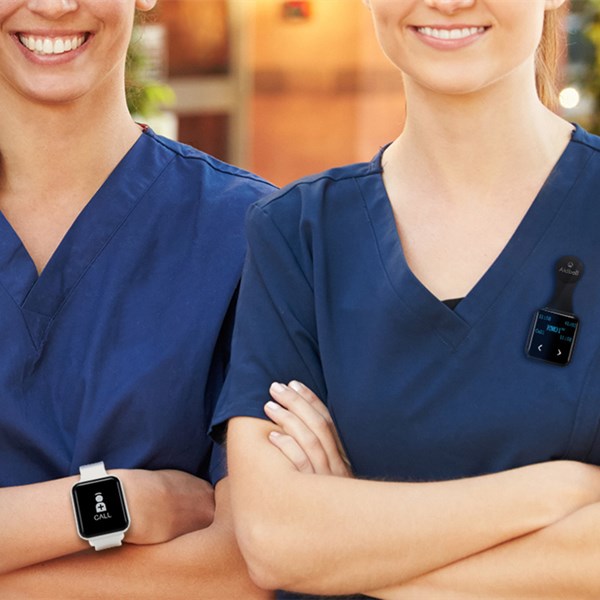
Wearable wireless receivers such as smart watch pagers or pendant receivers allow nurses to receive patient alerts instantly wherever they are inside the building.
This mobility offers several advantages:
- Faster emergency response
- Better communication during busy shifts
- Reduced dependency on central monitoring stations
- Improved staff productivity
Mobile receivers help nursing staff stay informed while moving throughout the facility.
Benefits of a LoRa Wireless Nurse Call System
One of the biggest innovations in modern nurse call systems is LoRa wireless technology (Long Range Communication).
For low-data alarm transmission, LoRa technology can offer longer range and lower power consumption than many short-range wireless options.
Key benefits include:
- Longer transmission range for large or multi-floor facilities
- Improved coverage through walls when the system is properly planned
- Low power consumption for battery-operated call devices
- Dedicated wireless communication independent of public internet access
- Flexible expansion with repeaters where necessary
Because call signals are transmitted wirelessly, healthcare facilities can reduce communication cabling and simplify system expansion when adding new rooms or departments.
This makes wireless nurse call systems especially suitable for hospitals, elderly care centers, rehabilitation clinics, and healthcare renovation projects.
Building a Safer Healthcare Environment with Wireless Nurse Call Systems
Healthcare facilities need reliable communication tools that support both patient safety and efficient staff coordination.
A wireless nurse call system can connect bedside call buttons, bathroom pull cords, corridor lights, nurse station monitors and mobile receivers without requiring extensive communication cabling. This makes it particularly suitable for nursing homes, elderly care facilities, rehabilitation centers and healthcare renovation projects.
By improving call visibility, supporting faster staff response and providing access to operational records, wireless nurse call technology can help healthcare providers build a safer and more efficient care environment.
Aidbell provides 433.92 MHz, LoRa and POCSAG wireless nurse call solutions for different healthcare applications. Contact our team to discuss your facility layout, system capacity and wireless coverage requirements.